UNM Digital Photography Exhibit, Now Through the End of July
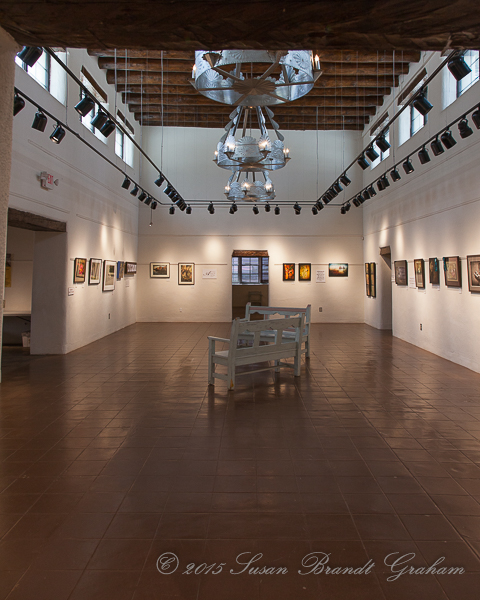
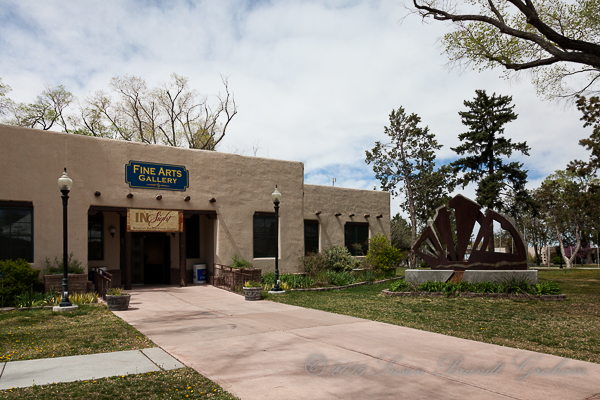
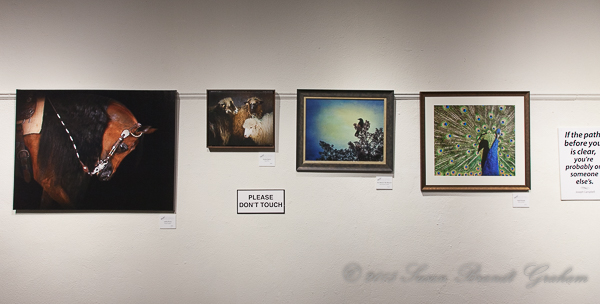
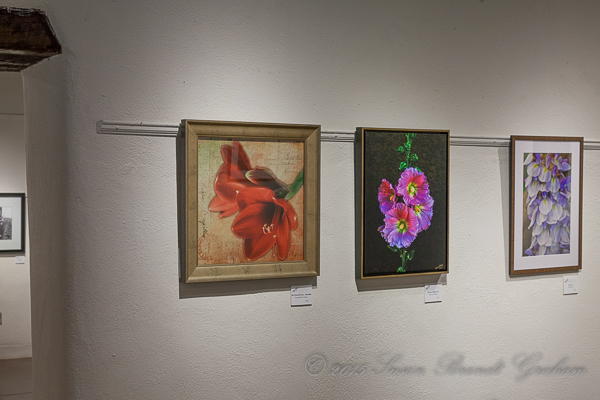
UNM Digital Photography Exhibit, arranged by the Digital Arts Program on the Continuing Education Campus, is up and open to the public from now through the end of July. It is in the Conference Center, the North Building.
Participants in the UNM Digital Photography Exhibit include the digital photography instructors, advanced students in the program, and graduates of the program (that would be me, 2009).
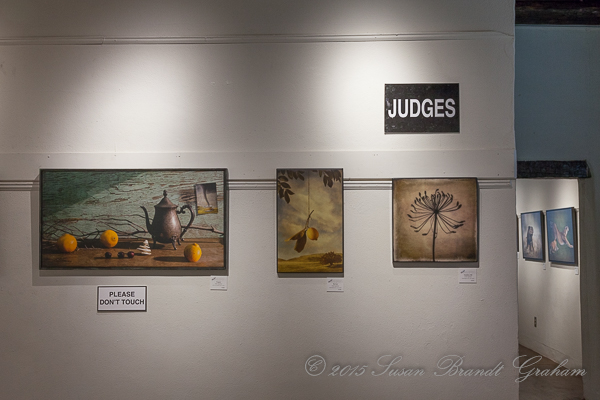
The UNM Digital Photography Exhibit is not a juried exhibit. Participants were invited to bring whatever pieces of their work they wanted to show.
The three pieces of mine that I chose have all been in juried shows. Although not intentional at the time of selection, I realized later the pieces represent a sort of developmental scheme.
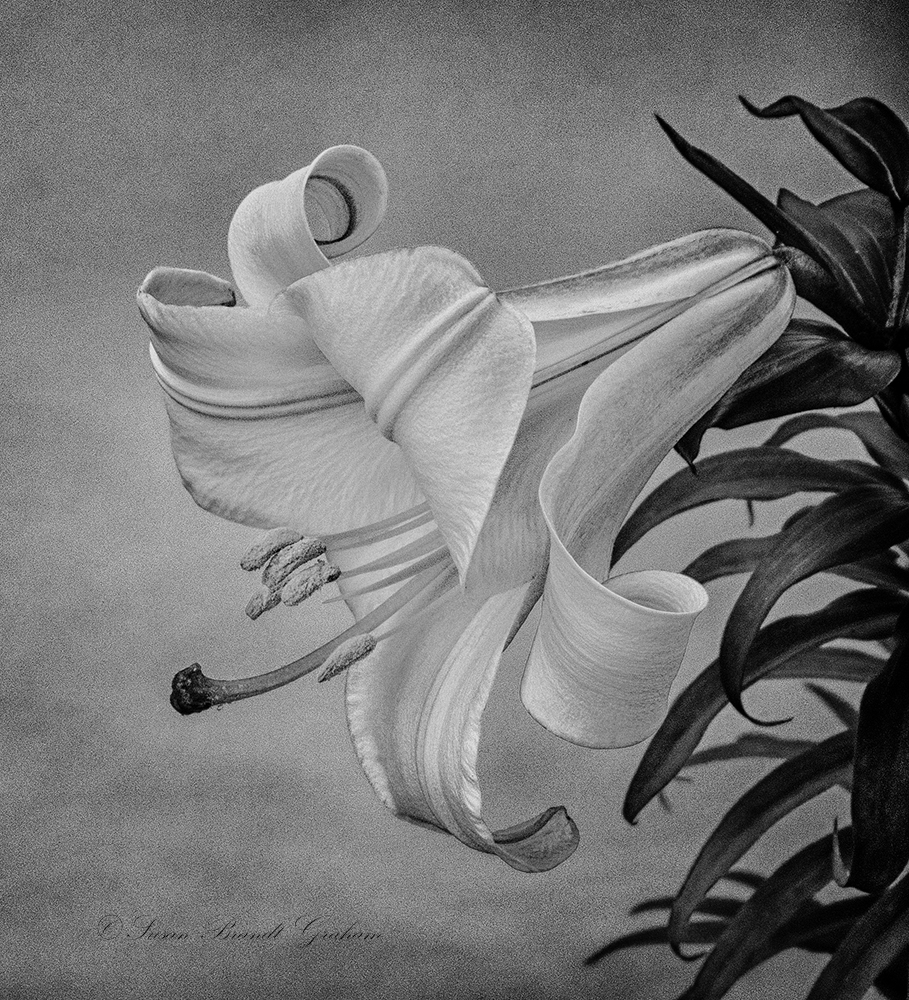
‘Lily’ Lily; printed on fine art water color paper
This image was made in 2009 with a Canon G9, a somewhat advanced but still a point-and-shoot camera. To date, this is my most awarded image. It was juried into the International Biennial Exhibition of Fine Art and Documentary Photography at The Borges Cultural Center in Buenos Aires, Argentina, from January 19th through February 27th, 2010. It was also juried into the Corrales Fine Arts Show here in New Mexico. It was awarded “1st Place – Outstanding Achievement” in Still Life at the 8th Annual Black and White Spider Awards. It was awarded the Bronze Medal, 3rd Place in Nature-Flowers at the 2012 Paris Photo Prize, along with 3rd place for People’s Choice Award. Again, this was an early piece done with a point-and-shoot camera. The piece has special meaning because my mother grew the lily, and held a white background for me as the light was quickly fading in her garden.
‘Gathering Storm’
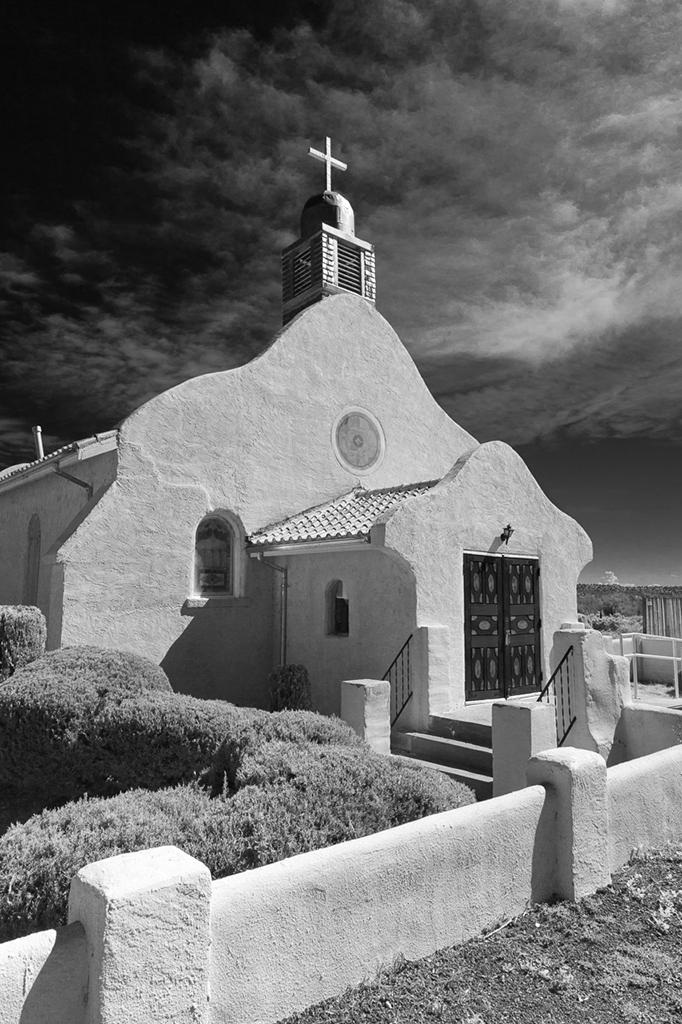
‘Gathering Storm,’ printed on true Black and White paper
This image is from a trip to the Jemez Mountains here in New Mexico over Autumnal Equinox weekend in 2013. Everything about that entire weekend was full of the magic for which New Mexico is known. This was at the very beginning of the trip. I had planned to photograph this church before I even left home. My traveling companions could not understand why I would even bother to stop to photograph it! I just wanted to! By this time I had moved up to a Canon full frame dSLR. This image was juried into the Corrales Fine Arts Show as well as the Annual New Mexico Photographic Art Show.
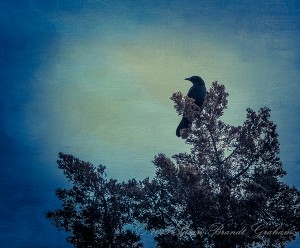
‘The Observer/The Observed’
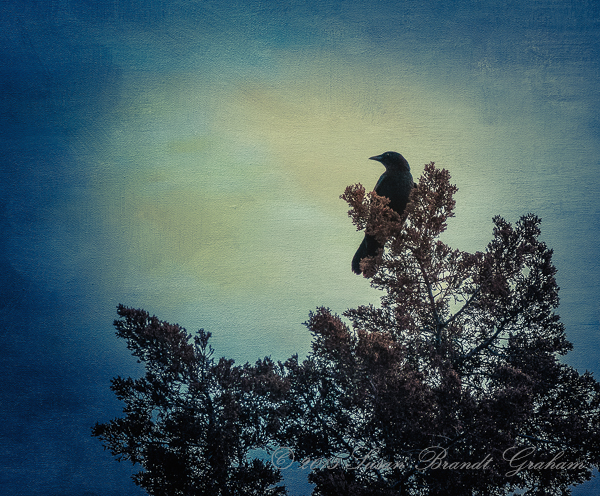
‘The Observer/The Observed,’ giclee print on fine art canvas
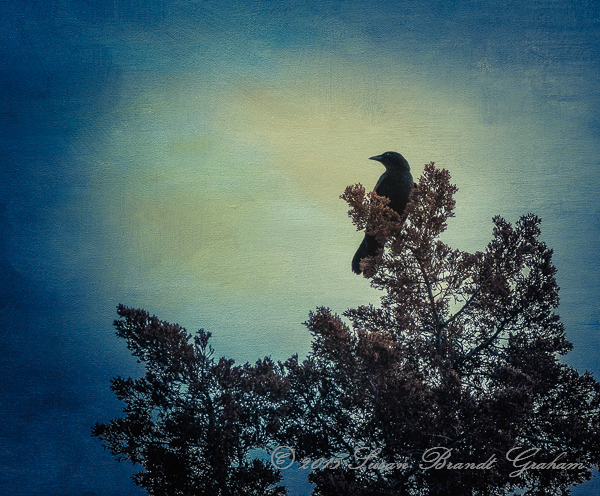
This image was created this year, and of the ones in this post, has the most meaning to me. Many of you know my son was diagnosed with leukemia over Thanksgiving weekend (he is now in remission and doing quite well, I’m happy to say), and this was done as I was trying to make sense of all that was happening. In mythology of some Native Americans, Crow is a messenger between worlds, as well as a trickster who can steal light from the sky (the sun) and carry it to people who need it. I rarely see crows in my yard, and this one stayed just long enough for this image. Editing it to show what I wanted to show took a long time; it also took my mind off a lot of things; and was the most creative thing I had done after my son was diagnosed. I had not intended to show it; I did the work strictly for me. But Jim Stallings, fellow anthropologist, writer, and friend wrote a poem about it as a gift to me and my family in those dark days of winter:
Spontaneous Poem from a Treetop Crow
In the lofty life of a wise old crow
Swaying in the topmost backyard branches
Like a magical clock counting down mortality’s coil,
May it not be in some secret way
We the awed observers
Have all along been honored by a wiser watcher?
– Jim Stallings
Jim’s poem encouraged me to enter the image, and it was juried into the 2015 InSight New Mexico show, “Through Her Eyes,” held in April. (It has also been juried into another show, to be held in July – more about that in a different post).
I invite my friends in the Albuquerque area, as well as friends who will be passing through Albuquerque between now and the end of July, to stop by the Conference Center on the UNM CE campus (Indian School and University) and see the UNM Digital Photography Exhibit, with works by the digital photography instructors, advanced students, and graduates of the digital photography program.
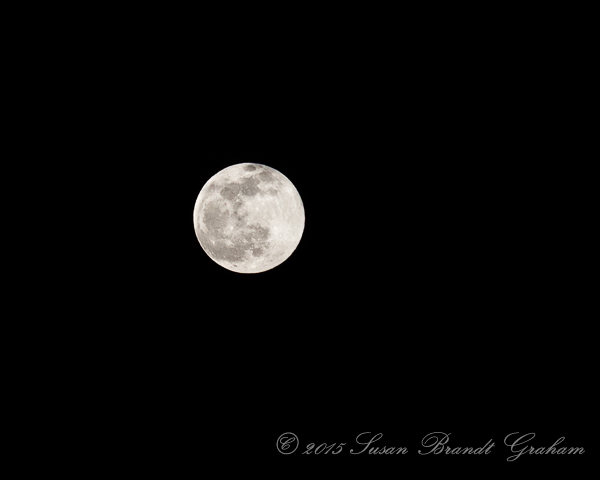
Spooky full moon – the words themselves make me think more of Halloween than a beautiful spring evening.
As the moon rose over the mountains, it was initially simply a beautiful moon.
Clear Sky and Beautiful Rising Moon
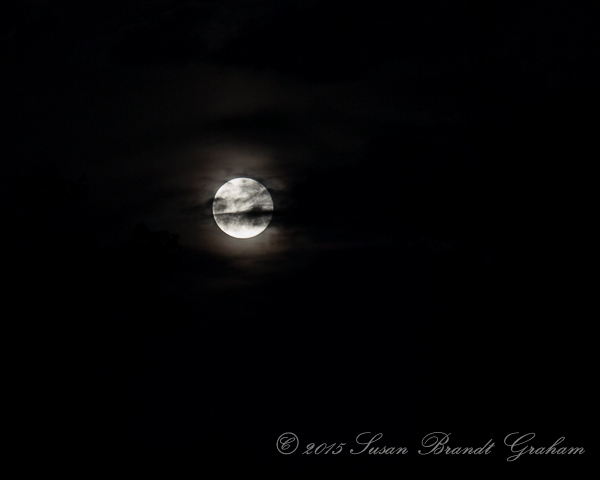
Very quickly, however, clouds began to move in, with some possibility of rain overnight. At the first appearance of the clouds, the moon did not appear too spooky.
Moon and Clouds
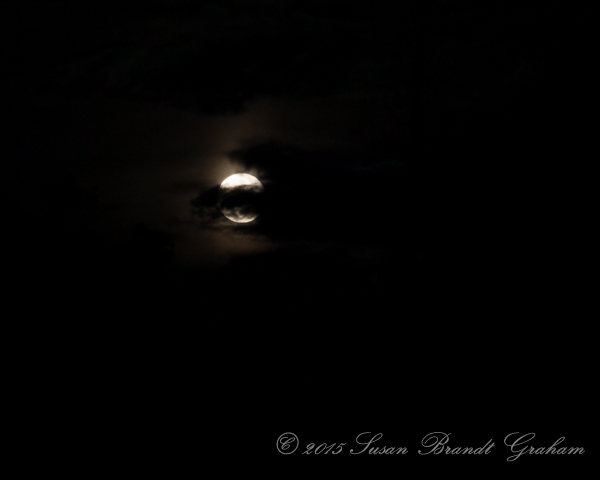
But, in a very short period of time, the moon with heavier clouds definitely had a spooky appearance.
Spooky Moon and Clouds
It really is a beautiful spring evening, although that is not the mood conveyed in the last image.
Seeing color: pretty simple for a color sighted person. It is so natural, it is easily taken for granted without much thought. That has been true for me until recently, in spite of the fact that color is so important to me in all aspects of my life and in spite of the fact I have lived with and been around colorblind people my entire life.
I began to give seeing color much more thought when I saw a beautiful video showing some colorblind people seeing color for the first time using EnChroma glasses, specifically designed to help colorblind people see color.
Seeing the video made me recall so many things about my father and son to which I had not given much thought in years. After seeing it, I wrote elsewhere:
This beautiful video allowed me for the first time to perhaps glimpse the world as my colorblind father saw it and my colorblind son sees it. My father has passed on, but he would have loved the chance to try these glasses. On vacations he always had trouble with traffic lights, until the positions became more standardized. The video gave me such a vivid example of why. My mother grew beautiful flowers, and he always tried to appreciate them, but the passion just wasn’t there. Once again, the video allowed me to understand why.
I knew from high school genetics that any son of mine would have a 50% chance of being colorblind, so when he was, it came as no surprise. I don’t even remember how old he was when we all realized it, but I’m sure it was when he was quite young. When he was a child, he always wanted black balloons. After seeing the video where the balloons were washed-out shades of blue and yellow to a colorblind person, I can really understand why. Black would stand out among those colors.
When my father was alive, the two of them together were a hoot, and they saw the world pretty much the same way. I’ll never forget listening to them the first time they watched a football game together and they were talking about “the blue team and the yellow team.” Even though I knew perfectly well they were colorblind, I thought they were putting me on! I came to realize that was not a joke, and how really differently they saw the world. The video, showing how the balloons would appear to a colorblind person, helped me “see” for the first time what the two of them were seeing: yellow and blue!
Being colorblind in the same way was, I believe, an additional strength to the grandfather-grandson relationship. Each had someone who understood without explanation what the other saw. In reading through some of the stories here, I appreciate even more how fortunate both of them were in that respect.
In spite of that mutual support, I cannot count the number of times my son has said, “I wish I could see the world the way other people see it, even if just once and just for one minute.” I never dreamed that could perhaps be possible for him.
I cried when I first saw this video, and I must have watched it at least 20 times. When my mother watched it, her first response was, “I wish these had existed when your father was alive.” Her second response was, “My grandson has to have a pair of these to try.” We will not know, of course, until he tries them how he really will see the world through them. But we all have hope that he will be able to see color like the people in the video (and other videos), and not “just once, even for just a minute,” but maybe for a very long time.
Regardless of the outcome with that, I appreciate the video for allowing me to begin to understand just how my father saw and my son sees the world.
I began to try to learn a lot more about colorblindness. I knew there were many kinds and degrees of colorblindness, and that red-green was the most common, but I had not known there were different types of red-green colorblindness. One type is helped more readily by the new glasses, one type not helped so much. I became really aware of that when I saw another video with a colorblind boy with the latter type trying to sort crayons without and then with his EnChroma glasses:
After I learned the type my son has and my father had, I re-read the EnChroma site:
Significant Color-Name Confusion
Green, brown, yellow, orange, and red may appear confusingly similar. This makes “naming” the color difficult. (I remember as a little kid trying to “teach” my father his colors. He was pretty patient with that.)
Difficulty with Traffic Signals
Green lights may appear to be white. Yellow and red lights may appear indistinguishable, especially at night.
Distorted Color Perception
For people with normal color vision, there is universal agreement on what certain “unique colors” look like. However due to the significant spectral shift of the L-cone, strong protans may perceive these colors to have different spectral locations, for example, something as ordinary as peanut butter, which should look brown, appears to be green for someone with color blindness!
From the always wonderfully scientifically accurate source, Wikipedia 😉
Protans have difficulties to distinguish between blue and green colors and also between red and green colors. It is a form of dichromatism in which the subject can only perceive light wavelengths from 400 to 650 nm, instead of the usual 700 nm. Pure reds cannot be seen, instead appearing black; purple colors cannot be distinguished from blues; more orange-tinted reds may appear as very dim yellows, and all orange-yellow-green shades of too long a wavelength to stimulate the blue receptors appear as a similar yellow hue. It is hereditary, sex-linked, and present in 1% of males.
I became more and more interested in trying to imagine what the world must have looked like to my father and now to my son. I believe the Enchroma video shows a milder form of red-green colorblindness. It definitely helped me see some things and begin to think about the issue, but I wanted to see if there was any way I could “see” what my son saw. There are sites on the internet that allow one to upload images and then see how they would look to colorblind people. Some are of the type father had and my son has, but I believe not as severe. I tried to think how I could “imagine” such a different way of seeing. And, then it occurred to me. Light is perceived in the red, green, blue wavelengths and their combinations. The cones in normal colorsighted people are red, green, and blue. For severe protans, red is severely deficient, so much so that pure red is often perceived as black.
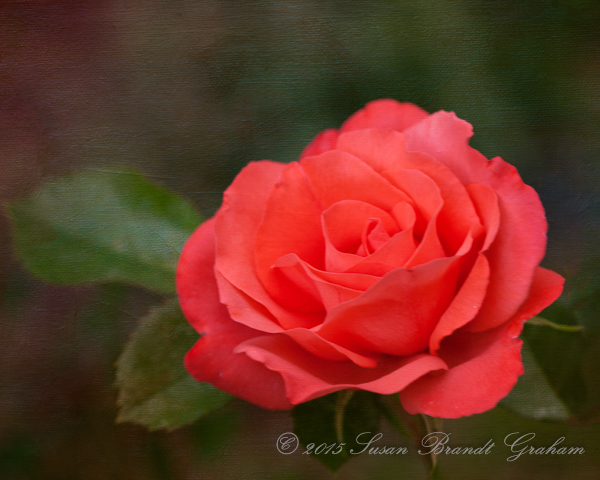
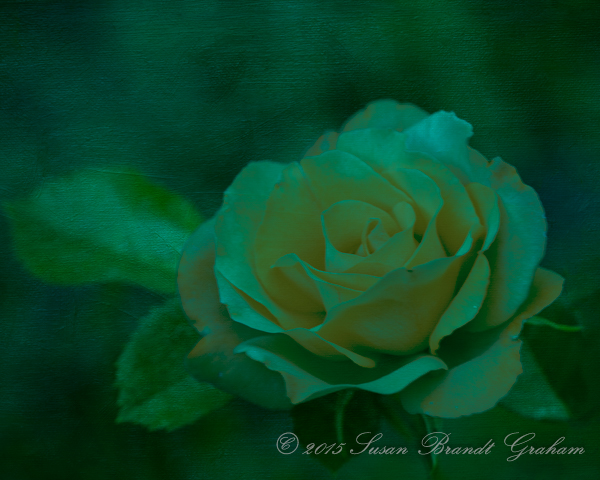
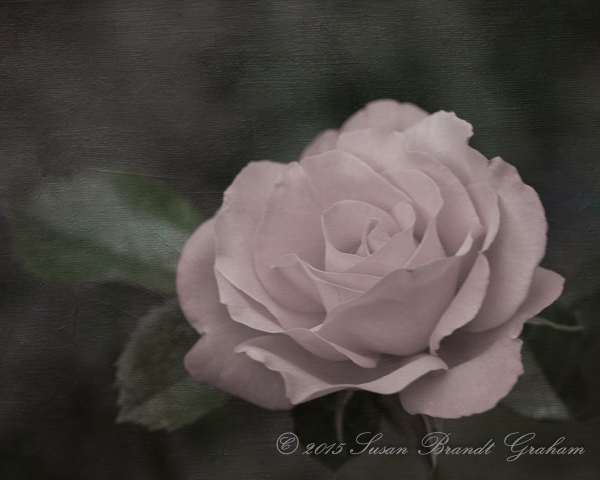
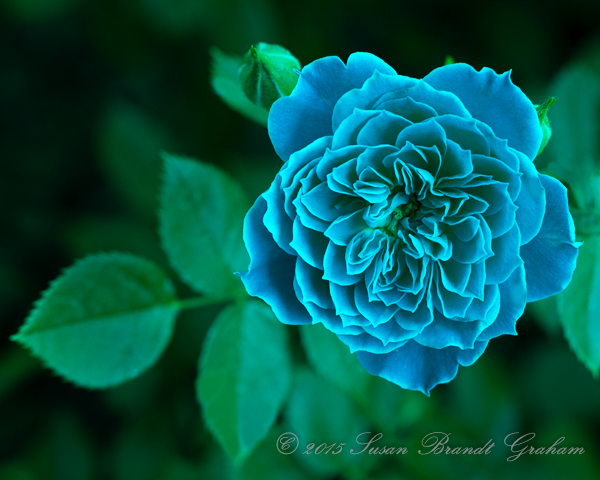
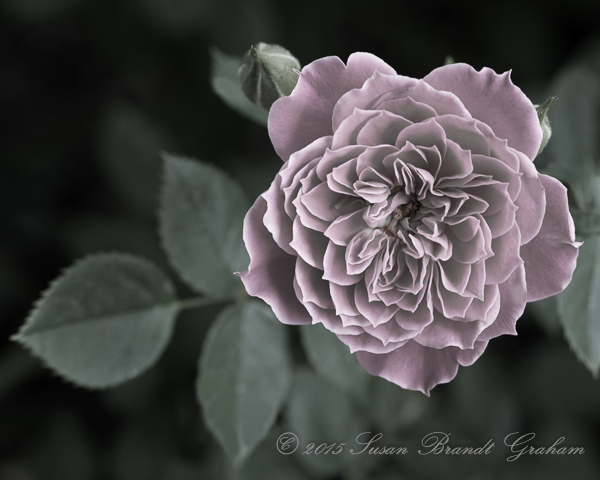
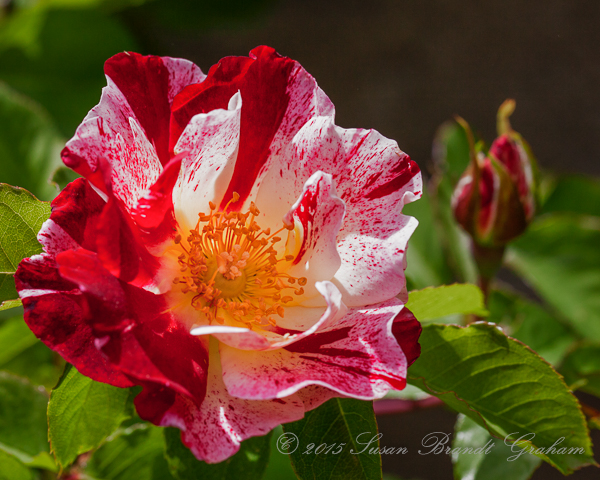
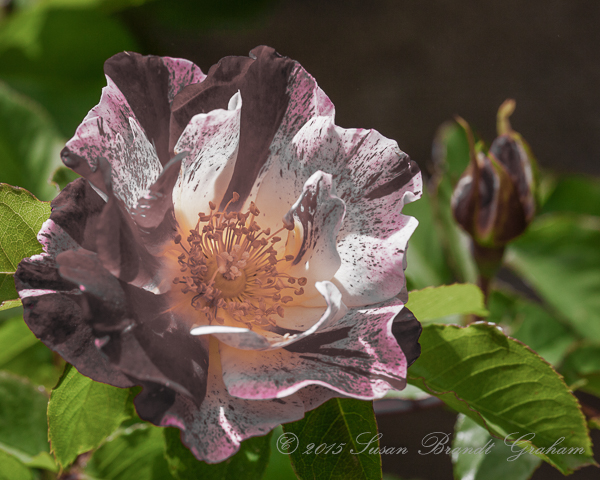
Putting all that I recently have read about colorblindness together, and thinking about how photoediting software makes use of the RGB (red, green, blue) nature of visible light, I experimented with some images. I cannot say that anyone but me sees these colors this way. I also, even for myself, cannot be certain of saturation, because I do not know how that varies even among color sighted people, to say nothing of colorblind people. But I do know that by manipulating the relevant color channels, I produced images that replicate the descriptions given (see above). For some of the images I also attempted to produce images that might be how the glasses alter the vision of a severe protans. This I am even much less certain about, but I took into account what my son has told me so far: he sees some things as pink where he never saw them as pink before, and the glasses make yellows much less vivid for him.
Example 1 – The Orange Floribunda Rose, ‘Marmalade Skies’
Orange Floribunda Rose, ‘Marmalade Skies’How Orange Rose, ‘Marmalade Skies,’ Might Be Perceived by Someone with Severe ProtanopiaHow That Same Rose Might Be Seen With EnChroma Glasses
Example 2 – The Miniature Rose, ‘Marriotta’
Miniature Rose, ‘Marriotta’‘Marriotta’ as Might Be Perceived by Someone with Severe ProtanopiaWith EnChroma Glasses – Perhaps
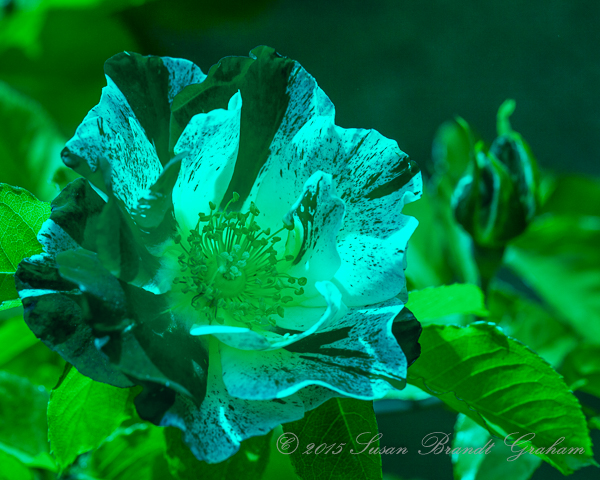
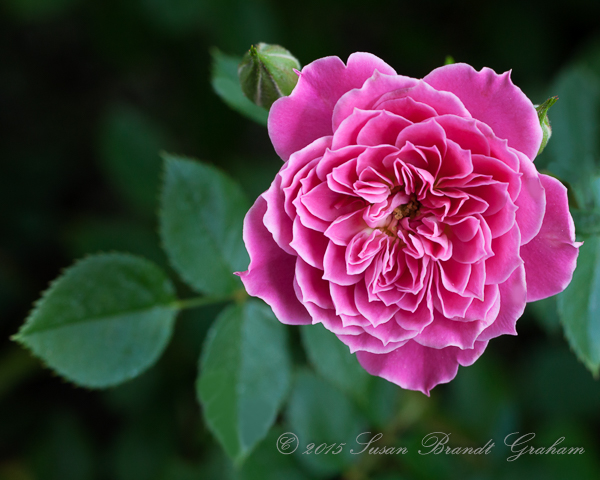
Example 3 – The Large Flowered Climber, ‘Fourth of July’
Large Flowered Climber, ‘Fourth of July’‘Fourth of July’ As Might Be Perceived By a Severe ProtansWith EnChroma Glasses – Perhaps
I have done many more in this series with flowers, but they offer nothing new from the ones posted here. So, I’ll save them for a bit.
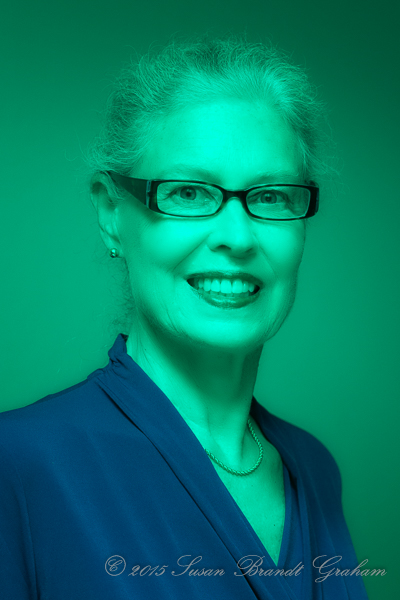
But, in reading in a forum, I became aware that to many red-green colorblind people, skin has a greenish cast. That made me want to try to picture what I might look like to my son.
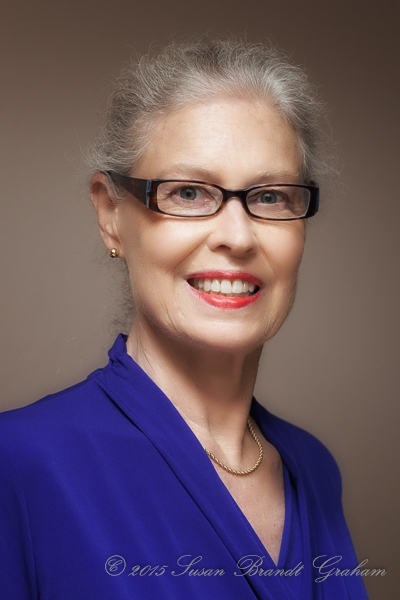
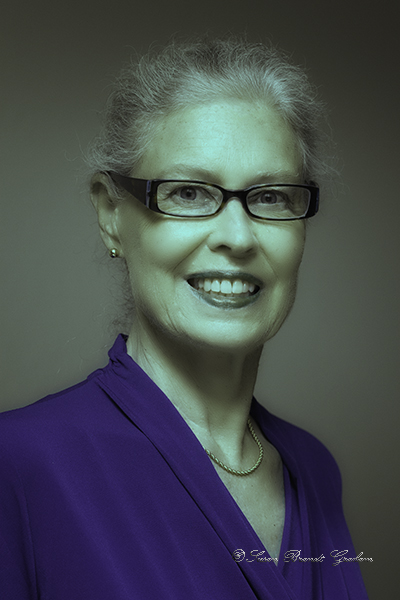
Mother – As She Sees HerselfMother – As She Might Be Perceived By Her SonMother – As She Might Be Perceived with EnChroma Glasses. This Might Be Overly Optimistic.
Added April 28, 2015: Mother – this might be closer to what she might look like with EnChroma glasses
My son has described his experience with the EnChroma glasses to date with the one word, “Interesting…” That is the one word I can think of at the moment to describe my response to this little exercise in trying to understand how my father did and my son does see the world. I do not know how accurately these images reproduce their world. I definitely believe there is some degree of similarity to their worlds of color.
[eta: my son confirms that the first two images in each set of three “look exactly the same to me…The third picture in each group looks different.”]
One thing this exercise has definitely taught me is to appreciate my seeing color, and not take it for granted. I will appreciate even more every attempt my son makes to say something about my flowers when he visits. And, I will continue to hope advances in color vision will continue to be made. People don’t die from not seeing color, but color contributes so much joy to life.
Revealing One’s Self: An Inherent Dilemma for a Photographer
Revealing one’s self through photography has both good points and bad points. But doing it is inherent in the process of creating an image. How much is one willing to reveal? The degree to which a photographer is willing to do that may be what distinguishes a creative image from a snapshot.
“There are always two people in every picture: the photographer and the viewer.” — Ansel Adams
“No man has the right to dictate what other men should perceive, create or produce, but all should be encouraged to reveal themselves, their perceptions and emotions, and to build confidence in the creative spirit.” — Ansel Adams
A self portrait may, but not necessarily, be the most revealing of all. I created this image when I was beginning to feel better, well enough to actually make images. My family and many of my friends were horrified. Only my artist friends (painters, writers, other photographers) were not. It was an honest image, revealing one’s self, and I will admit that even I was a little surprised that this is what I produced.
Lupus Fog
I would like to thank Stephen Perloff, editor of The Photo Review, for selecting this image from the 2014 Competition to appear in the online gallery,”Women’s Lives.”
Almost exactly one year to the date later I created an image very different in appearance at first glance, “The Observer/The Observed.”
The Observer/The Observed
“Simply look with perceptive eyes at the world about you, and trust to your own reactions and convictions. Ask yourself: “Does this subject move me to feel, think and dream? Can I visualize a print – my own personal statement of what I feel and want to convey – from the subject before me?” — Ansel Adams
I created this image at a time of different turmoil in my life. The Crow as symbol and in myth is a powerful creature around the world, but nowhere more so than in the Southwest. Crow is a Messenger who moves between Worlds; a Trickster who can steal Light from the Sky (the Sun) and bring it to people who need it; and an astute Observer. In early January I was out photographing a cloud bank rolling over the Sandia Mountains, with a storm predicted to follow it. Suddenly, some raucous crows appeared, seemingly out of nowhere, and they left as quickly as they came. This one crow, however, stayed behind, briefly, and seemed to pose for this one image, almost as a gift.
I did not intend to show this anywhere. It was personal, heavily edited, and reflected my mood at the time. In its own way, it was revealing one’s self. But, after friend, fellow anthropologist, and writer Jim Stallings wrote a short poem,
Spontaneous Poem from a Treetop Crow
In the lofty life of a wise old crow
Swaying in the topmost backyard branches
Like a magical clock counting down mortality’s coil,
May it not be in some secret way
We the awed observers
Have all along been honored by a wiser watcher?
– Jim Stallings
as a gift to me and my family, I began to consider showing the image. It can be seen through April 26 at the Fine Arts Building at EXPO NM as part of InSight New Mexico, a photography show by New Mexico women photographers.
Neither of these two images are what I think of as “typical” of my work, although it seems more of my work these days is following in the vein of these two. It is not by purposeful intention. It may simply be that at this stage in my life I have become more introspective and don’t mind so much if the world sees that. Revealing one’s self is perhaps becoming more comfortable as I age.
Photography by NM Women: InSight New Mexico Open through April 26
Photography by NM women was first organized into the show, InSight New Mexico, four years ago by LeRoy Perea, also the organizer for the large December photography show, Annual New Mexico Photographic Art Show. LeRoy believed that a show specifically for women photographers would give women more freedom of expression than perhaps the ANMPAS show. This year’s show, the fourth InSight, is a beautiful show. The only requirement was that the finished image had to start as a photograph, but beyond that, there were no restrictions, either in image creation or presentation.
The opening reception was last Saturday, April 4, but the show is open from 10:00-5:00 daily, except Mondays, through April 26. There is no charge for the photography show, held in the Fine Arts Building at ExpoNM, but Expo does charge parking on the weekends.
Fine Arts Building, EXPO NM
The Great Hall of the Fine Arts Building at EXPO NM:
Great Hall of the Fine Arts Building
Work by one of the jurors, Linda Ingraham:
Work by Linda Ingraham
One of my entries, “The Observer/The Observed”
“The Observer/The Observed”
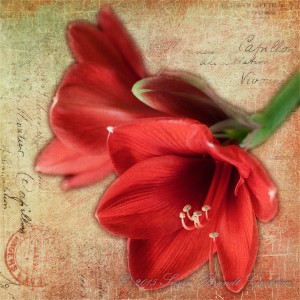
My other entry, “Postcard Series: Amaryllis”
Postcard Series: Amaryllis
Many thanks to LeRoy and the wonderful committee who put this show together, as well as to the jurors!
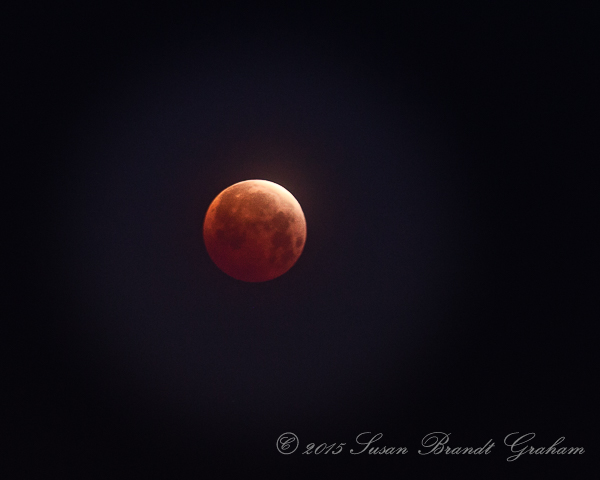
Blood red moon is an interesting phenomenon that can occur during a total lunar eclipse. Such an eclipse occurred early this morning, April 4, and was visible in Albuquerque.
Lunar eclipse, blood red moon
I had set out my tripod and gotten my camera ready before I went to bed last night, but did not set the alarm. I’m generally awake quite early. Today I did not awaken until 5:20 am, but that actually turned out to be okay.
The totality of this eclipse was short, less than five minutes. By contrast, the length of another total eclipse coming up in September is predicted to be roughly one hour and twelve minutes. That one will not be visible where I live, unfortunately.
However, I did get to see this one on April 4, which made me very happy. An auspicious beginning to this day…
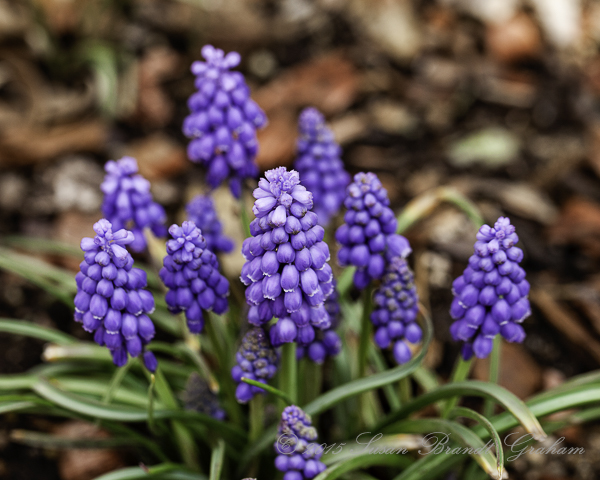
Early Spring Flowers: Yellow Crocus and Blue Grape Hyacinths
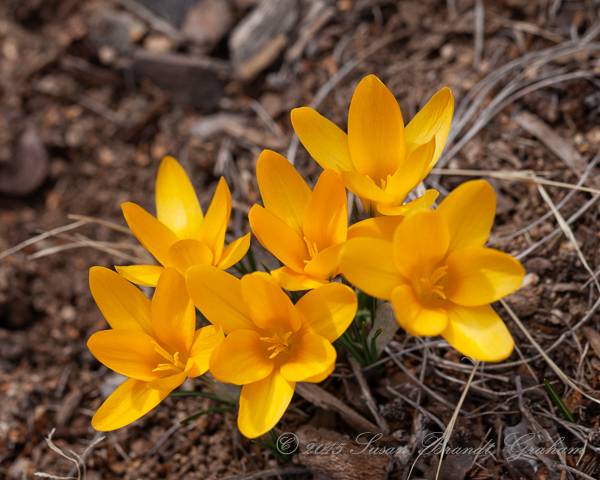
Early spring flowers – the earliest ones – are frequently a variety of bulbs. For today, the first day of Spring 2015, I present yellow crocus and blue grape hyacinths.
Yellow Crocus Early spring flowers, yellow crocus
Grape Hyacinths Grape Hyacinths
Daffodils and narcissus are blooming now, as are a variety of fruit trees. I have a new peach tree that my neighbors gave me last year, and it was starting to bloom when we got the snow a couple of weeks ago. Those blossoms will not make fruit this year. However, my pear trees are just beginning to bloom, and I should have picture of those before too long.
Today itself was actually rather cool, but this weekend should be good for getting more work done in the yard.
‘Through Her Eyes’ Photography Exhibit – 2015 Insight New Mexico
‘Through Her Eyes’ is the theme of the 2015 Insight New Mexico Photography Show. All of the exhibitors are women photographers who live in New Mexico. The theme is perfect for this particular show.
The timing worked out especially well for me. My two images in this show, “The Observer/The Observed” and “The Postcard Series – Amaryllis” were created by me for me, after I returned from Texas to be with my son when he was in the hospital. They reflect my thoughts in January, at a time when I was lost in my own thoughts. They are the images not only through the eyes of a woman of New Mexico, but also of a mother. I did not intend to show them anywhere. They were personal, especially “The Observer/The Observed,” which was heavily edited and reflected my mood at the time.
The deadline for entry into Insight New Mexico 2015 was rapidly approaching and I thought, well, why not. I am very happy to have both images in this show, and honored that the jurors chose them. This is always a fun show (the brainchild of LeRoy Perea, which happens because of the hard work of his Insight committee members!), but this year’s show, “Through Her Eyes,” has special meaning to me.
I hope to see many of you from the Albuquerque area there.
“The Postcard Series – Amaryllis.” Brightly colored amaryllis in the middle of winter“The Observer, The Observed.” The Watchful, Observant Crow on a Cold Winter Afternoon
Winter to spring transition in roses is abundantly clear in my garden this year. A couple of weeks ago we had several days of above average temperatures. Many roses began to send out new growth.
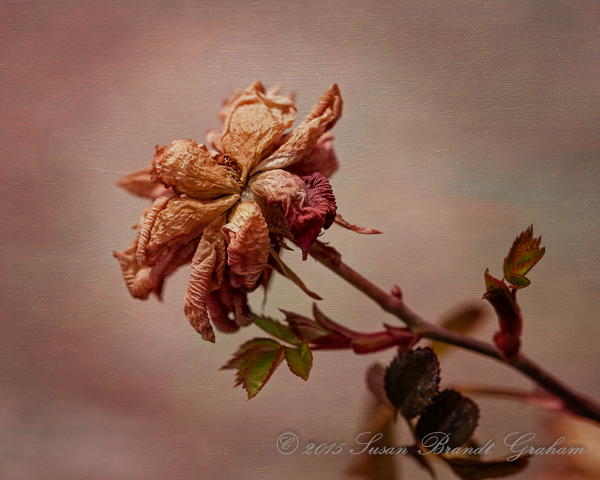
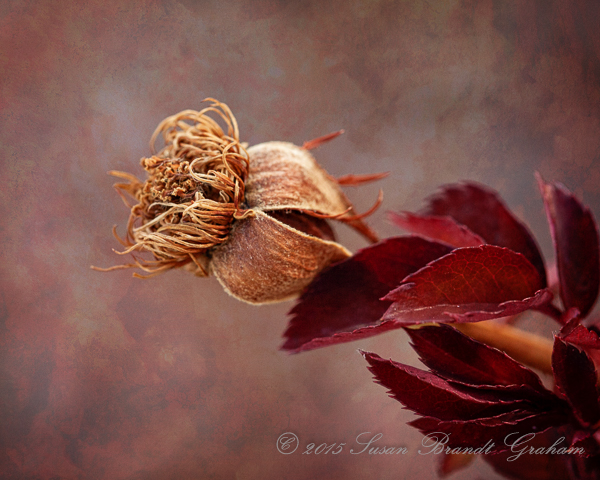
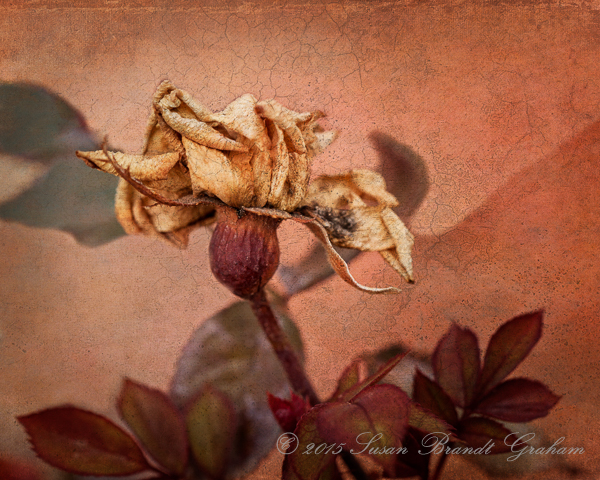
Here in the high desert of New Mexico we are taught not to prune our roses until late March or early April, because pruning stimulates new growth. That tender new growth will die if we get a late freeze, which is not uncommon here in the high desert. So, my roses have not yet been pruned, nor will they be for several weeks. But, because the roses are sending out new growth, I have had the opportunity to photograph old spent blooms and hips with the new growth: a winter to spring transition. I sometimes think of it as “the junction of life and death,” but I realize that is too strong for some readers. I personally find with junction of the remains of last year’s growth and blooms with this year’s brand new growth to be beautiful and interesting.
Some of the new rose leaves are red. This is not a photoshopped color. The red color is due to pigments called anthocyanins, which actually help protect the tender new growth from harsh UV light. As the plants mature, and they no longer need this protection, the pigments disperse, the leaves become green, and become chlorophyll factories through photosynthesis. Not all roses produce the red leaves on early spring growth, however.
‘Betty Boop’ with spent bloom without petals, and new leaf growthSpent bloom of ‘This is the Day’Spent bloom and hip of ‘Incognito’
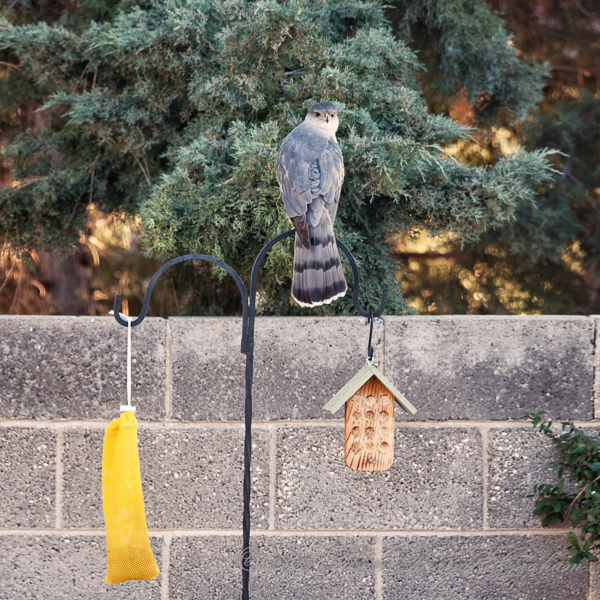
Cooper’s hawks visit frequently. I have seen one in the yard each day for the past week. I like to see the hawks. They are magnificent birds. But, I don’t want my little birds to be a daily meal. I think it is time for me to take down these bird feeders for the little birds for a bit, until this Cooper’s Hawk stops coming by every afternoon.
Cooper’s Hawk, hanging out waiting for an easy dinner
This part of Albuquerque, with its “urban forests,” is home to a very dense population of Cooper’s hawks – as dense as in any of their natural habitats. They are very successful in this urban environment, partly because of people like me who attract their meals for them. The hawks have to eat, too, but I don’t have to make it too easy for them.